Recreational poker is a format where the result is decided by skill, strategy and calculation rather than money stakes. Unlike gambling, there is no monetary prize, no risk of losing property and no prize pool made from players' contributions. The game is played with tournament chips that have no monetary value.
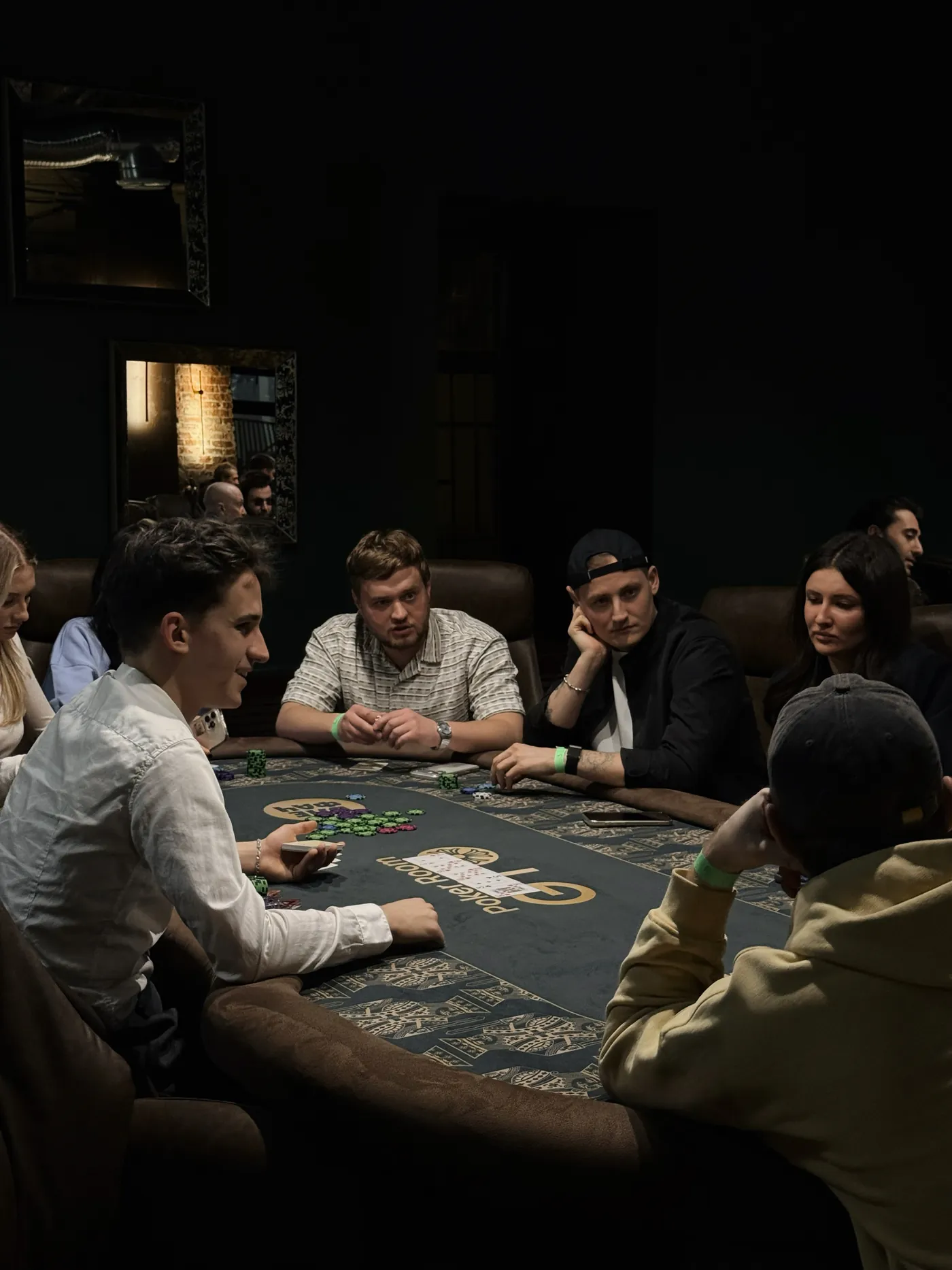
How recreational poker differs from gambling
The key legal difference is the absence of stakes and monetary winnings:
- the game uses notional chips that cannot be exchanged for money;
- there is no prize pool made from players' money;
- the entry ticket is the price of a leisure event, not a bet;
- winning a tournament is a sporting result, not a cash prize.
Why poker is a sport
Over a long distance it is skill that wins, not luck: probability calculation, reading opponents' ranges and emotional control. That is exactly why the GTO approach — the game-theory-optimal strategy exists.
Which skills the game develops
- probabilistic thinking and quick counting;
- risk management and discipline;
- psychological resilience;
- strategic planning.
Where to play recreational poker in Moscow
The Poker Room GTO club runs legal recreational poker with no money stakes. Read more about where to play legally in Moscow and about the no-money-stakes format in separate articles.
Why the long run matters
Anyone can get lucky in a single hand, but over hundreds of hands the player who makes mathematically correct decisions comes out ahead. That is why recreational poker is treated as a sport: a tournament result is the sum of decisions, not one lucky flop.